Local food and climate change

We have to change our narrative around climate change. Our government tells us that we are too small here in New Zealand to make any positive impact on climate change. But we have been leaders in social change. We were the first nation to give women the vote in 1893, we have been world leaders in social policy and were the first in the Western alliance to take significant action against nuclear proliferation. We can lead with climate change do – or at least do our bit to help.

Growing the local food system generates multiple benefits for the community. As we strengthen the system, we anticipate benefits for health and local economies. Into this mix we can create further synergies by including strategies for climate change mitigation.

A recent NZ Herald article by Victoria Ransom and Phillip Mills highlight the benefits of carbon sequestration in trees and soil. If we were to plant 187 million permanent native trees by 2030, we could return to 1990 emission levels. That’s 40 trees for every New Zealander or 6.3 million trees in Northland. And we can anticipate that displacing oil with renewables will enhance these gains.

Ministry of Agriculture and Fisheries data reports sequestration rates ranging from 7tonnes of CO2/ha for unimproved pasture to 1238 tonnes of CO2/ha for lowland podocarp broadleaf forest. Mixed manuka/kanuka scrubland ranges between 238 and 554 tonnes of CO2/ha.

plantings benefits

Imagine if we were to accelerate the rate of plantings around waterways, roadways and city streets. We can create food forests in urban areas and food for bees in rural areas. As our waterways become more protected by a mantle of trees, less sediment and nutrient flows into the water and water quality improves. The network of green corridors enhances birdlife and makes our region even more beautiful. And these efforts sequester carbon hopefully protecting us from the worst impacts of climate change.

Kanuka is a great option for planting. It grows much bigger than its cousin manuka, reaching up to 18 metres. While not sequestering as much carbon as denser mixed forest, it  sequesters much more than pasture. The honey has qualities as least as good as manuka.

The impacts of climate change are scary and seem to be intensifying more quickly than most of us anticipated. Its time to shake of our inaction knowing that we have options, and individuals can make a difference.
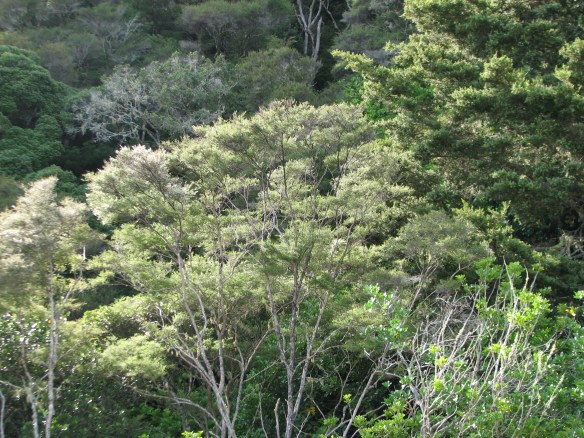
kanuka

Kanuka (Kunzea ericoidies) grows to an impressive size and its early summer floral displays are under-rated.

Sustainable food systems and the UNEP

Take a look at this brilliant video from the United Nations Environmental Programme (UNEP). In under 4 minutes it provides a clear and concise evaluation of our global food system.

It is good to know that at the highest level of global governance there is awareness of the dire state of our food system. The video briefly explores solutions, notably the need to break down the silos between government and health authorities, producers, consumers and business people.

Simply identifying the food system as a system is a great start. When we are embedded in systems, often systems that we were born into, we tend to take the status quo for granted. For example my parents shopped at local grocery stores whereas I now shop at supermarkets. My children’s first experience of supermarkets were as infants – they have grown up with the phenomena.

So how do we effect change? This will be explored in future posts.

You can check out the UNEP Sustainable Food Systems Programme here. Their video was uploaded to YouTube on May 9 2016 and in 10 weeks has only had 4049 views. Please share this post or the video URL to increase circulation of these ideas.

Please also feel free to comment? How do you think we can effect change?

The iPES-Food report – from uniformity to diversity

In June 2016 the International Panel of Experts on Sustainable Food Systems released its first thematic report, From Uniformity to Diversity: A paradigm shift from industrial agriculture to diversified agroecological systems. The report advocates the shift from industrial food systems to sustainable food systems.

The failure of the industrial food system is presented starkly in the figure below, from page 9 of the report.

iPES Food industrial food systems failure

Failures of the industrial food system.

In 2015 4.7 billion suffered from inadequate nutrition, that is 6 out of every 10 people. While other global systems are complicit in this failure, collectively we have failed, given the technology we have, the education systems and the exploitation of cheap energy sources.

The report states:

Today’s food and farming systems have succeeded in supplying large volumes of foods to global markets, but are generating negative outcomes on multiple fronts: wide- spread degradation of land, water and ecosystems; high GHG emissions; biodiversity losses; persistent hunger and micro-nutrient deficiencies alongside the rapid rise of obesity and diet-related diseases; and livelihood stresses for farmers around the world.

As someone working at the local level towards sustainable food systems, it is heartening to know that at the global level awareness of the failure of orthodox systems are rising, and there are organisations uniting people from diverse nations to take action. The transformation of our food systems is a place where we can think globally and act locally. Of all of the critical systems that support our economic and social well-being, food is a catalyst for change.

The report includes excellent analysis of the eight “lock-ins” that perpetuate the industrial food system. We can erode their influence with the opportunities emerging around the planet.

  1. Policy incentives for diversication and agroecology
  2. Building joined-up ‘food policies’
  3. Integrated landscape thinking
  4. Agroecology on the global governance agenda
  5. Integrated food systems science and education
  6. Peer-to-peer action research
  7. Sustainable and Healthy Sourcing
  8. Short supply chains .

I commend the work of the iPES-FOOD panel. Enjoy their report.


Food chains or food webs?

The choice is becoming starker as we learn more about the impacts of industrial food delivered through long food chains. Do we want to support industrial food delivered through long food chains or sustainable food systems closer to home? This is the first of a series of extracts from Our Food Story. But first, here is Pete Russell personalising the shift from a long food chain to a food web advocate.

Food chains are the food system manifestation of supply chains. Globalised food chains are long food chains (LFC), while localised food chains are short food chains (SFC).

Short food chains

SFCs generate closer relationships between producers and consumers enabling the re-socialising of food. SFC offer consumers food with known provenance and enhanced quality. Critically, SFCs open opportunities for revitalising rural communities (Marsden, Banks, & Bristow, 2000). Face to face interactions between producers and consumers collapse the power-differences inherent in complex, globalising LFCs. (Feagan, 2007). Continue reading

Our food story

Our Food Story

Today Our Food Story, an investigation into Northland’s food system is being published. It surfaces a compelling vision of the benefits accruing from a more connected and local food system. The executive summary from the document is reproduced below.

Thank you to my co-researcher Eloise Neeley for her superb work over summer to enable this report to happen.

Executive summary

We all eat it, and food has been fundamental to our economies for millennia. This report reveals opportunities to reshape our local food system with strong economic and social benefits. It is difficult to think of another industry as pervasive as the food industry. On the production side, it provides an economic base across our region, rather than being concentrated in Whangarei and Northland’s towns. On the consumption side it feeds whanau, but also patients in health facilities and customers in cafes, restaurants and hotels.

We are currently far from optimising the potential of the food system. Food distribution is dominated by corporations who primarily operate here to extract dividends for their shareholders, rather than support a “sticky economy”. Fast Food chains (also here to extract dividends) and supermarkets sell food that is often nutritionally deficient generating a plethora of diet based disease. The average weekly spend of New Zealand households is $61.90 on alcoholic beverages, tobacco and ready to eat foods, but only $22.60 on fruit and vegetables. Shifting this equation even minimally will have positive impacts.

This report focuses on food produced for local consumption. It integrates data from desktop research and interviews of 32 people involved in food production, consumption and outlets. It reveals opportunities to improve returns to growers while creating a stronger value proposition for food outlets. There are also exciting opportunities for added value processing. Data from two U.S. locations identify actual and potential new jobs generated by a re-invigorated local food system equating to between 233 and 477 jobs for Northland. The economic benefit of substituting 20% of produce imported into the region with local food sold through local food distributors and outlets, this would equate to additional economic benefits of $27.7 to $55.4 million annually for Northland.

The synergies between employment and enterprise generation, social cohesion and the potential to revolutionise positive health outcomes remain largely unexplored in Northland centres. We offer this report as a platform to generate momentum towards a more robust food system.

Our recommendations are:

  1. Investigate the feasibility of food hubs in Whangarei and other Northland Centres.
  2. Convene a regional discussion on the local food economy.
  3. Promote local food.

You can access a copy of the report here. Our Food Story: Understanding the market dynamics of fruit and vegetable production, distribution and produce outlets in Northland

Stevia – sweet as

Stevia (Stevia rebaudia) is a great addition to any Northland garden. Although the plant is of tropical South American origins, it grows well here. It is a perennial that dies back in Winter, but in my garden, regrows every spring. The plants can handle some frost, so most Northland sites are okay. In these situations the Stevia.net website recommends recommends cutting the plants back to 100mm of stem to set them up for next season’s growth.

bee on stevia
Bees love the white flowers that appear in mid-Autumn.

Health benefits

Refined white stevioside, extracted from leaves is hundreds of times sweeter than sugar. The leaves contain about 10% stevioside. This level intensifies as the growing season progresses.

Remarkably, stevia not only is free from the downsides of sugar, it can also remediate some of the problems associated with sugar. This page from the Greenmedinfo website references studies that reveal the efficacy of stevia in treating type 1 and 2 diabetes, hypertension and other health issues. One study identifies anti-inflammatory and antitumor properties.

This article, advises that green leaf stevia is the best option. As products become more processed, there is more potential to reduce benefits, or to generate harm. The author ranks stevia as his third preference as a sweetener after raw honey and dates. There are some cautions about side effects from using stevia.

Eating stevia

I use stevia in smoothies and salads. As I forage around the garden for salad ingredients, stevia is a favourite choice. The leaves have a slightly bitter after-taste when consumed alone, but in a salad they provide a sweet burst of flavour that really compliments the bitter flavours from salad greens.
This video explains the harvesting and drying process.

Vegetable tourism, Trojan horses and sticky economies

Pam Warhurst is in New Zealand sharing the message of edible landscapes. In 2009 she and her friend Mary cleaned up a piece of waste land in her Yorkshire Town of Todmorden and planted veggies. This started a movement that is now world-wide.

c558_incredible_edible_todmorden_green_route_food_to_share_incroyables_comestibles_w1600

Food grown in public spaces in Tormorden (image source here)

In her interview with Kim Hill Pam relates how Todmorden has been transformed through the three related sets of action – what Pam calls three plates. The first is community action, manifest in planting food in spaces on berms, in front of shops, anywhere that a plant can take hold. The food is free for others to take – and generally people respect and get engaged to give back.

The second plate is education – reviving the arts of growing, cooking and preserving food. These activities can be integrated into most curriculum areas in schools. The third plate is business. Ironically providing free food for people stimulates food enterprise. Farmers see niches opening up and diversify into, for example, cheese making, cafes start to sell local food. Now Todmorden is benefitting from what Pam calls vegetable tourism. She calls this a “sticky economy” because people chose to spend more money locally.

Pam tells her story and explains the three plates in this Ted Talk.

Pam is a superb communicator and exemplifies an inclusive approach that engenders engagement rather than alienation. There are lots of things that we shouldn’t be doing in this world, but she prefers to focus on the positive things we can do – the small actions all of us can take. “People respond positively to being positive”. Her journey has taught Pam the power of small actions.

If we could believe in the power of small actions… that is the thing that has come out of this, we all have actions that we can do collectively, if we join up the dots, create  something much bigger.

Pam is spending time in Christchurch, a city being recreated after the recent earthquakes. Nearby Geraldine has embraced the edible landscapes kaupapa with locals finding all sorts of spaces to grow food.

running duck cafe garden

Garden’s outside Geraldine’s “Running Duck Cafe”

For Pam, its all about working together to make a better world.

“Growing people’s self belief that they can create a kinder world using the Trojan horse of food.”